Chain Reorganizations in Practice: Detection, Recovery, and Building Applications That Survive Them

Photo: Charles J. Sharp, CC BY-SA 4.0, via Wikimedia Commons
A chain reorganization—colloquially, a reorg—occurs when a node receives a competing chain tip that has greater accumulated work or weight than its current canonical chain, causing it to abandon some number of previously accepted blocks and replace them with a different sequence. From the network's perspective, this is not a failure. It is the protocol operating as designed, resolving the inevitable ambiguity that arises when blocks propagate across a geographically distributed network with non-zero latency. From an application developer's perspective, it is one of the most dangerous events a production system can encounter.
The gap between these two perspectives is where most reorg-related application failures originate.
Why Reorgs Happen
The immediate cause of a reorg is always the same: two or more valid blocks are produced at approximately the same height, the network temporarily fragments along the competing chain tips, and the fork resolution mechanism eventually selects one branch as canonical. The depth of the resulting reorg—measured in the number of blocks that are unwound—depends on how long the network remained fragmented before convergence.
Shallow reorgs of one or two blocks are routine on proof-of-work networks and not uncommon on some proof-of-stake designs. They occur constantly on Bitcoin and Ethereum's pre-merge chain, typically without causing application-level harm because most systems wait for multiple confirmations before treating a transaction as settled. Deeper reorgs—five, ten, or more blocks—are rarer but not impossible, and their causes are more varied: network partitions, eclipse attacks, selfish mining strategies, and, in the case of smaller proof-of-work networks, 51% attacks.
Proof-of-stake networks with deterministic finality mechanisms—those that use BFT-style consensus to finalize blocks after a quorum of validators attest to them—can bound reorg depth by design. Once a block is finalized, the protocol guarantees it will not be reorganized away without violating the safety property of the consensus algorithm, which would require a large fraction of validators to behave dishonestly and would result in their stake being slashed. This is a meaningful security improvement, but it comes with its own tradeoffs.
The Finality-Liveness Tension
Protocols that offer deterministic finality must make a choice when the network cannot achieve quorum: halt finality or continue producing blocks without finalizing them. This is the practical expression of the CAP theorem's consistency-availability tradeoff applied to blockchain consensus.
Ethereum's proof-of-stake design, for instance, continues producing blocks during periods when the network cannot finalize—a condition known as non-finality—but those unfinalized blocks remain subject to reorganization. During the network instability events that have occurred on the Ethereum mainnet since the Merge, applications that assumed finality was always imminent encountered exactly the kind of reorg exposure they were designed to avoid.
For developers, the practical implication is that deterministic finality is a conditional guarantee, not an absolute one. The condition is network health. When network health degrades—due to client bugs, infrastructure outages, or adversarial action—the finality guarantee suspends, and the application must be prepared to operate in a probabilistic finality regime until conditions improve.
Detection Mechanisms
Detecting a reorg in real time requires monitoring more than the latest block hash. A robust detection system tracks the following signals.
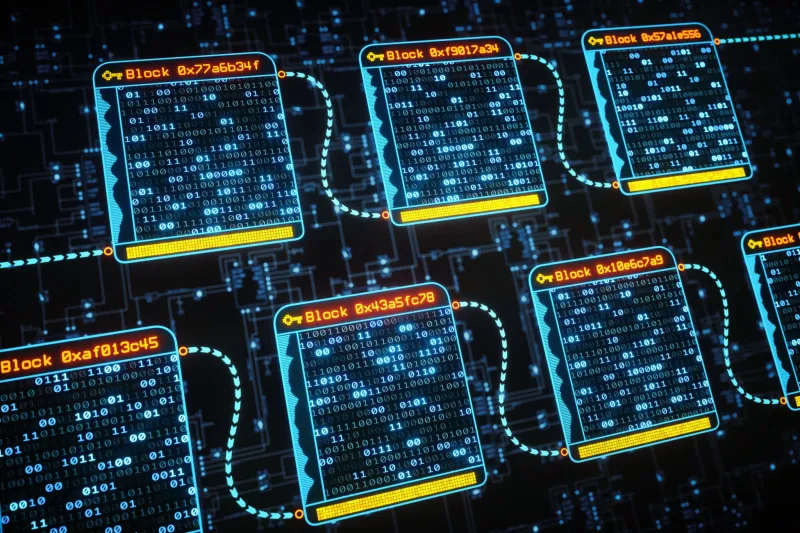
Parent hash continuity. Each block header contains the hash of its parent block. An application that indexes block headers and detects a parent hash that does not match the hash of the previously seen block at height N-1 has identified a reorg. The depth of the reorg can be determined by walking back through parent hashes until a common ancestor is found.
Transaction receipt invalidation. After a reorg, transactions that were included in reorganized blocks may no longer be present in the canonical chain. Applications that cache transaction receipts must re-validate them against the current canonical chain tip after any detected reorg.
Event log consistency checks. Applications that maintain off-chain state derived from on-chain event logs must replay events from the common ancestor block whenever a reorg is detected. Failure to do so results in off-chain state that diverges from canonical on-chain state—a condition that is difficult to detect and dangerous to operate under.
Confirmation depth monitoring. Rather than treating block inclusion as a binary settled/unsettled state, well-designed applications track the number of blocks that have been built on top of a given transaction's inclusion block. This confirmation depth metric provides a continuous probability estimate of settlement rather than a discrete threshold.
Recovery Strategies
Once a reorg is detected, the application must decide how to respond. The appropriate strategy depends on the application's state model and the depth of the reorganization.
Idempotent state updates. Applications that model state changes as idempotent operations—where applying the same event twice produces the same result as applying it once—can safely replay event logs from the common ancestor without risking state corruption. This design pattern is the single most effective reorg mitigation available at the application layer.
Event sourcing with reorg awareness. Applications built on an event sourcing architecture maintain a complete history of state transitions rather than only the current state. When a reorg is detected, the application can roll back its state to the common ancestor height and replay the canonical event sequence from that point. This approach requires more storage but provides deterministic recovery from reorgs of any depth.
Pending transaction resubmission. Transactions that were included in reorganized blocks return to a pending state. Applications that submit transactions programmatically must detect this condition and resubmit affected transactions, accounting for the possibility that nonce sequences have changed and that gas price conditions may differ from the original submission context.
User-facing settlement indicators. Consumer-facing applications should communicate settlement confidence rather than binary confirmation status. Displaying a confirmation depth progress indicator—"3 of 12 confirmations"—is more honest and more useful than displaying "confirmed" after a single block, particularly on networks with meaningful reorg risk.
Designing Reorg-Resilient dApps
The architectural choices that produce reorg-resilient applications share a common theme: they treat blockchain state as eventually consistent rather than immediately final, and they build the reconciliation logic that this consistency model requires.
State machines that can be rolled back to any prior checkpoint, event logs that are treated as the authoritative source of truth rather than derived caches, and settlement workflows that gate irreversible off-chain actions—shipping physical goods, releasing locked funds, issuing credentials—on finality rather than mere inclusion are the hallmarks of reorg-aware design.
For applications deployed on networks without deterministic finality, the question is not whether a reorg will occur but how deep a reorg the application can tolerate before its integrity is compromised. Answering that question explicitly, and designing the confirmation depth thresholds accordingly, is the engineering discipline that separates robust production systems from those that fail quietly when the network behaves as designed.
Reorgs are not anomalies. They are a fundamental property of any distributed consensus system operating over a network with non-zero propagation delay. Building applications that treat them as such is not a luxury—it is a prerequisite for operating reliably on decentralized infrastructure.