Beneath the Consensus Layer: How Message Propagation Architecture Shapes Network Performance
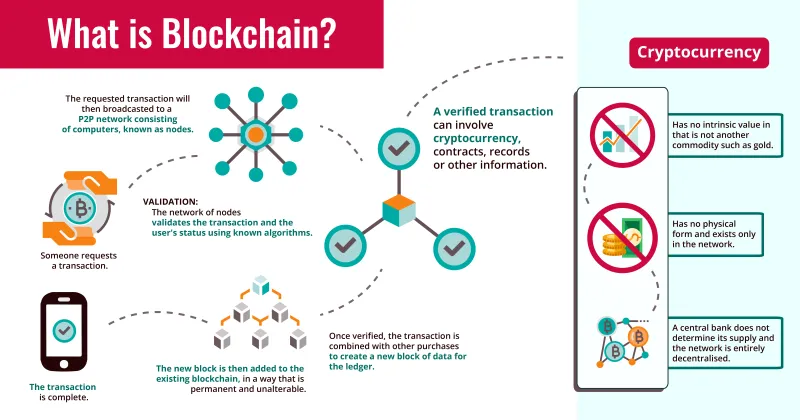
When engineers evaluate the performance of a decentralized protocol, the conversation typically gravitates toward consensus mechanisms—Proof of Stake variants, BFT derivatives, or hybrid finality models. Yet in practice, the layer responsible for carrying messages between peers before consensus even begins often determines whether a network succeeds or fails under real-world load. Message propagation architecture is, in many respects, the circulatory system of a distributed network: invisible when healthy, catastrophic when impaired.
This article examines three primary propagation paradigms—gossip-based flooding, structured overlays, and hybrid approaches—and provides a framework for engineers to evaluate which model best fits their protocol's requirements.
The Mechanics of Gossip-Based Flooding
Gossip protocols, sometimes called epidemic protocols, operate on a deceptively simple principle: each node that receives a message forwards it to a random subset of its peers. Through repeated fan-out, the message eventually reaches the entire network. The model is inspired by how information spreads in social networks, and its probabilistic nature is simultaneously its greatest strength and its most significant liability.
The primary advantage of gossip flooding is resilience. Because no single node or path is authoritative, the network degrades gracefully under node churn, partial failures, and adversarial conditions. Bitcoin's original peer-to-peer layer uses a gossip-inspired approach, and Ethereum's devp2p stack relies on similar mechanisms for transaction dissemination.
However, gossip flooding carries a measurable bandwidth cost. In a network of n nodes where each node fans out to k peers, the total message redundancy grows substantially as the network scales. For transaction-heavy environments—where thousands of messages per second must propagate across hundreds of validators—this overhead is non-trivial. Studies of Ethereum's mainnet have documented cases where redundant message delivery consumed a disproportionate share of validator bandwidth during periods of peak mempool activity.
Latency profiles in pure gossip systems are also unpredictable. Because routing is probabilistic, tail latencies can be significantly higher than median latencies, which creates challenges for time-sensitive consensus rounds.
Structured Overlays: Trading Flexibility for Efficiency
Structured overlay networks impose deterministic topology on the peer layer. The canonical example is a Distributed Hash Table (DHT), where each node occupies a position in a logical key space and routing follows defined rules. Kademlia, the DHT underlying many peer-to-peer systems including IPFS and early versions of Ethereum's discovery protocol, routes messages in O(log n) hops by design.
The efficiency gains are compelling. Structured overlays dramatically reduce bandwidth waste by ensuring messages travel along defined paths rather than flooding indiscriminately. For large-scale deployments where bandwidth costs are a legitimate operational concern, this matters considerably.
The tradeoff is brittleness. Structured overlays assume a relatively stable topology. Under high churn—common in permissionless networks where nodes join and leave continuously—maintaining DHT consistency requires significant overhead. Eclipse attacks, where an adversary strategically occupies positions in the key space to intercept or suppress messages, are also a well-documented concern in structured overlay designs.
For validators in a Proof of Stake network, where consistent message delivery directly affects block proposal timing and attestation aggregation, the failure modes of structured overlays introduce risks that must be carefully weighed against their efficiency advantages.
Hybrid Propagation: Engineering for Both Speed and Robustness
The most sophisticated modern protocol implementations reject the binary choice between gossip flooding and structured overlays in favor of hybrid architectures that combine properties of both.
Ethereum's current libp2p-based gossip layer—GossipSub—is an instructive case study. GossipSub maintains a mesh of full-message peers for each topic (providing low-latency direct delivery) while using a separate gossip mechanism for metadata propagation and mesh repair. Nodes that consistently deliver messages early are rewarded with higher peer scores, creating an emergent incentive structure that biases the network toward well-connected, performant participants.
This scoring mechanism addresses one of the core challenges in permissionless networks: not all peers contribute equally. By incorporating delivery performance into peer selection, GossipSub effectively creates a soft stratification of the peer layer without sacrificing the open participation model that defines public blockchains.
Solana's Turbine protocol takes a different approach, borrowing from BitTorrent's piece-based distribution model. Blocks are sharded into small packets and distributed across a stake-weighted tree of validators. Higher-stake validators receive data earlier and relay it downstream, creating a propagation structure that aligns network topology with economic weight. The result is impressive raw throughput, though critics note that the stake-weighted design introduces centralization pressures that may conflict with long-term decentralization goals.
Latency, Bandwidth, and Validator Participation: The Three-Way Tradeoff
Every propagation architecture implicitly makes choices across three dimensions: latency, bandwidth consumption, and accessibility to validators with constrained resources.
Optimizing purely for latency—as high-frequency trading infrastructure does—typically requires dedicated, low-latency network paths and high-bandwidth connections that exclude home validators and smaller node operators. This accelerates a trend toward validator centralization that undermines the security model of most public blockchains.
Optimizing purely for bandwidth efficiency, conversely, may introduce latency spikes and delivery inconsistencies that degrade consensus performance. For protocols where block times are measured in hundreds of milliseconds, even modest propagation delays can cascade into missed attestations and reduced chain finality rates.
The practical recommendation for protocol designers is to instrument propagation behavior extensively during testnet phases. Metrics including message delivery ratio, time-to-first-delivery across geographic regions, and bandwidth consumption per validator class should be tracked before mainnet deployment. Tools such as Grafana dashboards integrated with libp2p's built-in metrics endpoints provide a starting point for this observability layer.
Recommendations for Protocol Engineers
For teams designing new peer-to-peer layers, several principles merit consideration:
Favor mesh-based gossip with scoring for permissionless networks. The resilience properties of gossip flooding are difficult to replicate with structured approaches, and peer scoring mechanisms provide a practical path to performance optimization without sacrificing openness.
Profile your validator population before committing to a topology. A network where most validators run on enterprise hardware in co-location facilities has different propagation requirements than one designed for global, consumer-grade participation.
Treat propagation layer testing as a first-class concern. Shadow forks, simulated churn environments, and geographic distribution testing should be part of every protocol's pre-launch checklist.
Consider the interaction between propagation and MEV. Message propagation latency directly influences ordering fairness. Networks where certain nodes consistently receive transactions earlier than others create structural advantages that can be exploited. This connection between the peer layer and economic extraction is a growing area of protocol research that deserves attention at the design stage.
The message propagation layer is not merely infrastructure—it is architecture. The decisions made here shape validator economics, geographic decentralization, and the practical security of every consensus round. Engineers who treat it as an afterthought do so at their network's peril.