Speed of Light, Speed of Consensus: How Physical Latency Quietly Centralizes Decentralized Networks
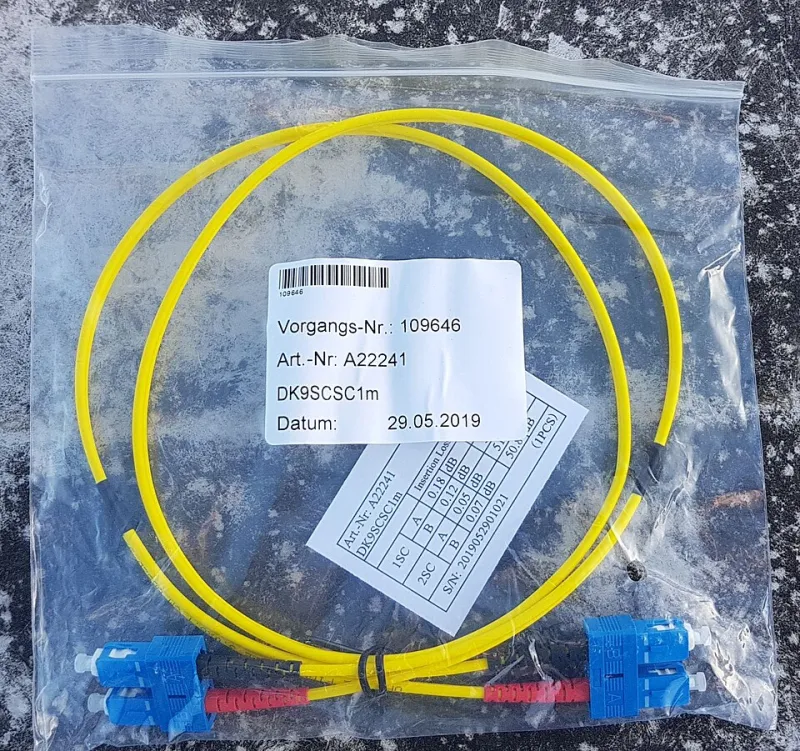
Photo: Asurnipal, CC BY-SA 4.0, via Wikimedia Commons
Decentralization is frequently discussed in terms of token distribution, validator counts, and governance structures. What receives far less attention is the role of physical infrastructure — specifically, the measurable, immutable constraints imposed by the speed of light and the geography of internet exchange points. Latency is not a configuration parameter that can be tuned away. It is a fundamental property of the network substrate, and its effects compound in ways that quietly erode the very decentralization that protocol designers work to preserve.
The Physics Are Not Negotiable
Light travels through fiber optic cable at approximately 200,000 kilometers per second — roughly two-thirds of its speed in a vacuum. The round-trip time between New York and Tokyo, at roughly 10,800 kilometers of direct distance, imposes a theoretical minimum of around 108 milliseconds. Real-world measurements consistently land between 150 and 180 milliseconds, accounting for routing inefficiencies, switching overhead, and the non-linear paths that submarine cables actually follow.
For a proof-of-work network operating on a 10-second block interval, 180 milliseconds of propagation delay is a minor inconvenience. For a proof-of-stake network targeting 400-millisecond slot times — a design increasingly common in high-throughput chains — that same delay represents nearly half the available window for a validator to receive a block, validate it, and broadcast an attestation. Miss the window, and the attestation is either penalized or ignored entirely.
This is not a hypothetical concern. Empirical studies of major proof-of-stake networks have consistently shown that validators located in North America and Western Europe demonstrate attestation inclusion rates 8 to 15 percentage points higher than those operating from Southeast Asia, South America, or sub-Saharan Africa. The disparity is not explained by hardware differences or software misconfigurations. It is explained by geography.
Orphaned Blocks and the Hidden Centralization Tax
Orphaned blocks — valid blocks that are excluded from the canonical chain because a competing block reached sufficient validators first — are a direct product of propagation latency asymmetry. When two validators produce blocks in rapid succession, the one whose block propagates faster wins. Validators with lower latency to the network's majority stake win this race more often, accumulating rewards at the expense of their geographically distant peers.
Over time, this dynamic produces a rational economic response: validators migrate toward network hubs. Co-location facilities in Ashburn, Virginia; Frankfurt, Germany; and Singapore dominate validator distributions on most major networks precisely because these locations minimize latency to the largest concentrations of existing stake. The result is a feedback loop — concentration reduces latency disadvantage, which improves rewards, which attracts more validators, which further concentrates the network.
This concentration is not visible in on-chain metrics that count validator addresses. A network can display 10,000 active validators while hosting 70 percent of its stake within three physical data centers. The decentralization is nominal rather than structural.
Measuring the Problem Before Solving It
Protocol teams that take latency seriously begin with instrumentation. Deploying lightweight probe nodes across diverse geographic regions — including second- and third-tier internet markets — provides ground truth about actual propagation times rather than theoretical estimates. Tools like the Ethereum consensus layer's built-in peer scoring mechanisms, or custom implementations using libp2p's connection metrics, can surface latency distributions across the peer graph.
What these measurements typically reveal is a bimodal distribution: a cluster of well-connected peers with sub-50-millisecond round-trip times, and a long tail of peers experiencing 200 to 500 milliseconds or more. The long-tail validators are disproportionately located outside North America and Europe, and they bear the majority of attestation penalties and orphaned block costs.
Architectural Mitigations Worth Implementing
Regional Clustering with Cross-Region Bridges
One of the more practical structural responses involves organizing the peer graph into regional clusters connected by dedicated relay infrastructure. Within a cluster — say, validators distributed across the continental United States — peer connections are optimized for low latency using latency-aware peer selection algorithms. Cross-region communication is then handled by a smaller set of well-provisioned relay nodes whose sole function is rapid inter-cluster block propagation.
This architecture mirrors the design of content delivery networks and reduces the effective propagation diameter of the network without requiring validators to physically relocate. The trade-off is a modest increase in architectural complexity and the introduction of relay nodes as a potential point of failure, which must be addressed through redundancy and economic incentives for relay operators.
Latency-Aware Peer Selection
Most peer-to-peer networking stacks select peers based on availability and connection success rather than measured latency. Implementing a latency-aware scoring layer — one that periodically measures round-trip times to known peers and preferentially maintains connections to the fastest subset — can meaningfully reduce block propagation times for individual validators without requiring any protocol-level changes.
Libp2p implementations can incorporate this through custom peer scoring functions. The engineering investment is modest, and the improvement in attestation performance for mid-latency validators is well-documented in production deployments.
Edge Node Architectures
For validators operating in high-latency regions, edge node architectures offer a compelling alternative to physical relocation. An edge node maintains a lightweight, always-connected presence at a well-peered data center location, receiving blocks and attestations on behalf of the validator's execution environment. The validator's signing keys and consensus logic remain under the operator's control, while the network-facing functions benefit from the edge node's superior connectivity.
This approach introduces custody and trust considerations that must be addressed in the implementation design, but it substantially narrows the participation gap for validators in underserved regions without requiring protocol-level changes.
The Broader Design Implication
Protocol designers frequently treat latency as an operational concern — something validators and node operators manage on their own. This framing is a mistake. When latency systematically disadvantages certain participants, the protocol's economic structure effectively taxes geographic diversity. The result is a network that converges toward centralization not through any actor's malicious intent, but through the accumulated pressure of rational economic choices.
Addressing this requires treating latency as a first-class design variable: incorporating propagation delay models into consensus parameter selection, publishing latency benchmarks alongside validator diversity metrics, and building relay infrastructure into the protocol's economic incentive structure rather than leaving it as an afterthought.
The physics of signal propagation will not change. The question is whether the protocols built on top of that substrate are designed to compensate for those constraints or to inadvertently amplify them.